Blog·25 JULY 2026·7 MIN
Finding a Men's Therapist on Brisbane's Northside
Finding a men's therapist on Brisbane's northside is not only about the closest appointment. It is about fit — approach, setting and someone you can do useful work with.
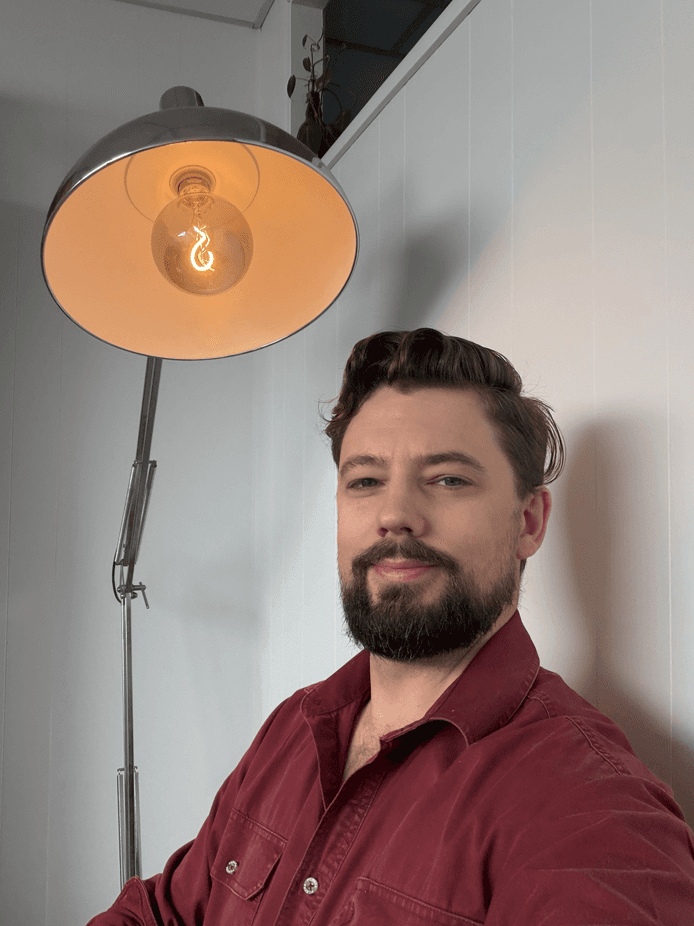
Matthew Lewin
Accredited Social Worker
Jump to section
Searching for a therapist can feel strangely difficult.
You may have reached the point where you know something needs attention, but every website starts to look the same. There are long lists of qualifications, clinical terms, smiling stock photographs and promises of a “safe space”.
None of that necessarily tells you what it will feel like to sit in the room with the person.
Finding a men's therapist on Brisbane's northside is not only about choosing the closest appointment. It is about finding someone with the professional background, approach and environment that allow you to do useful work.
Start with what you actually need help with
You do not need to diagnose yourself, but it helps to identify the situation that led you to search.
Are you looking for help with:
- Pressure, stress or burnout?
- Anger, irritability or shutting down?
- Relationship conflict?
- Fatherhood and parenting?
- Workplace problems or injury?
- Low mood, anxiety or loss of direction?
- A major decision or life transition?
- Patterns that keep repeating despite your efforts to change them?
A therapist may work across several of these areas, but their website should give you some sense of whether they regularly work with people facing the problem you are bringing.
A broad claim that someone “supports all concerns” is less useful than a clear explanation of how they understand the issues that matter to you.
Qualifications matter, but they are not the whole decision
Therapy is professional work. It is reasonable to check the person's qualifications, professional membership, experience and the approaches they use.
Those details provide a foundation. They do not automatically create a good therapeutic fit.
Two therapists may have similar training but communicate very differently. One may be highly reflective and open-ended. Another may be more structured, practical and direct.
Neither style is automatically better. The important question is whether the approach helps you understand the problem and do something useful with what you learn.
Do you need a male therapist?
Some men specifically want a male therapist. Others care more about whether the therapist understands men and can work without stereotyping them.
There are reasons a man may prefer speaking with another man. He may expect less explanation around male friendships, fatherhood, work, physical identity or the pressure to provide. He may also feel less self-conscious discussing shame, anger, sex, failure or relationship difficulties.
That preference is valid, but gender alone does not guarantee understanding.
Look for whether the therapist speaks about men as complete people rather than as a collection of problems. Good men's therapy should be able to take strength, responsibility, emotion, relationships and vulnerability seriously at the same time.
Look at how the therapist talks about change
A website can tell you a lot about what the therapist values.
Do they describe therapy as a place to talk indefinitely, or do they explain how insight connects to action? Do they make unrealistic promises, or do they acknowledge that change takes practice? Do they speak clearly, or hide behind professional language?
A practical therapist should be able to explain:
- How the first session works.
- How goals are identified.
- What approaches may be used.
- How progress is reviewed.
- What is expected between sessions.
- What confidentiality means and where its limits sit.
- What happens if the service is not the right fit.
You should not need a psychology degree to understand the service you are considering.
The location and setting matter
Therapy has to fit into your actual life.
Consider travel time, parking, appointment hours and whether you can arrive without turning the session into another stressful obligation.
The setting also affects how comfortable you feel. Some people prefer a conventional clinic. Others find medical buildings, reception areas and highly polished rooms uncomfortable.
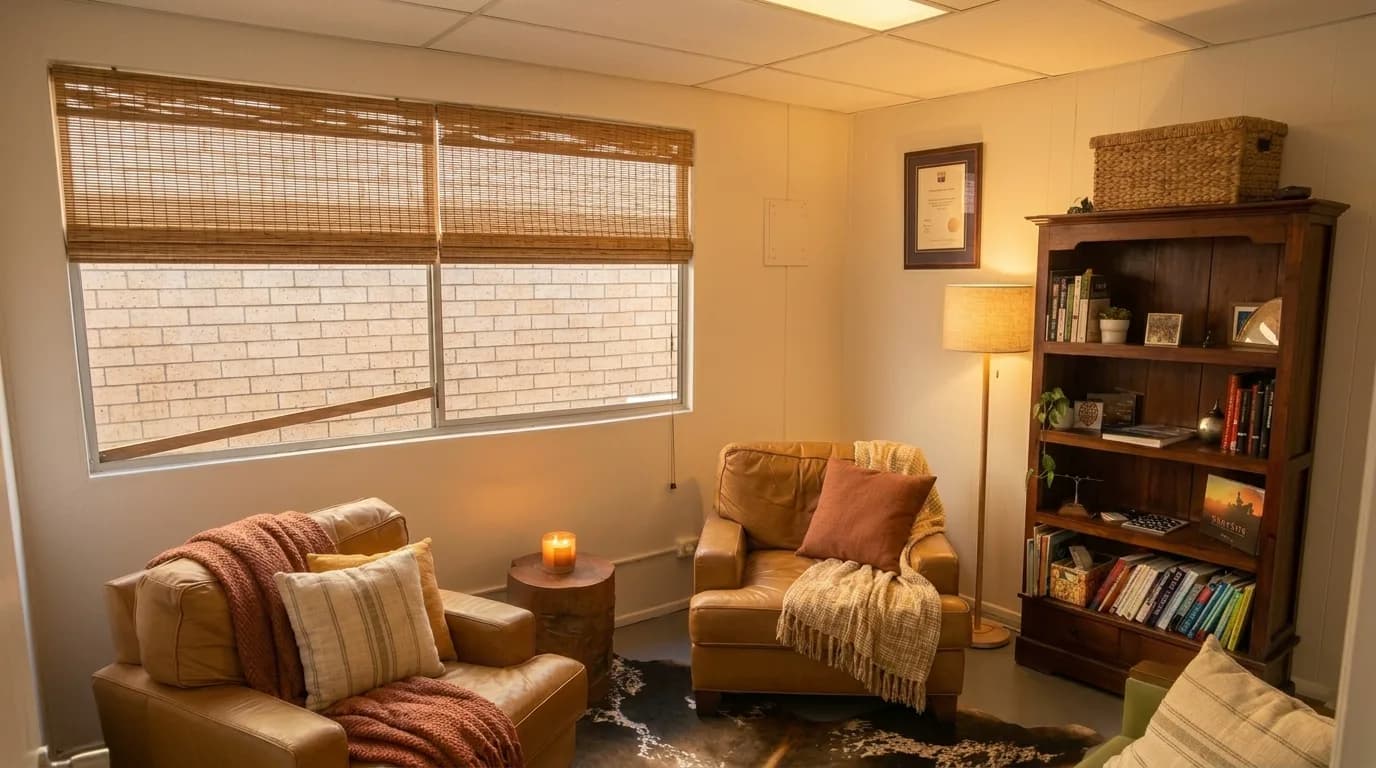
Timber Therapy operates from a private workshop and counselling space in Stafford on Brisbane's northside. The environment is deliberately practical and less clinical.
You can sit and talk in the counselling space. Where appropriate, some men may also choose to work on a simple timber project using supervised hand tools.
The woodwork is optional. It is not a test of skill and it is not the therapy itself. It is another way of creating an environment where a useful conversation can happen.
Pay attention to the first contact
The first email, call or session does not need to feel perfect, but it should give you some indication of how the therapist works.
Notice whether they:
- Answer questions clearly.
- Explain fees and cancellation terms before you commit.
- Treat your concern seriously without making it more dramatic than it is.
- Allow you to say that you do not know where to start.
- Listen for what matters rather than forcing the conversation into a pre-set script.
- Can be direct without becoming dismissive.
You are not looking for a new best mate. You are looking for a professional relationship in which you can be honest, challenged and supported to make change.
Useful questions to ask before booking
You are allowed to ask questions before deciding.
- Do you regularly work with men facing this kind of problem?
- What happens in the first session?
- How practical or structured is your approach?
- Do you offer face-to-face and online appointments?
- How do you decide whether therapy is helping?
- Is the hands-on option suitable for the issue I want to discuss?
- What happens if I do not feel that the service is the right fit?
A brief call can help answer practical questions. It is not a replacement for the first session, but it can reduce uncertainty.
You do not need to choose perfectly
Some men put off therapy because they are trying to find the perfect therapist before booking anyone.
There is no reliable way to know exactly how the work will feel until you have a conversation. You can make a considered choice, attend a session and then evaluate whether the approach makes sense.
A useful first session should leave you with greater clarity about the problem, the direction of the work and whether you can speak honestly with the person in front of you.
Men's therapy in Stafford, Brisbane North
Timber Therapy provides face-to-face therapy for men from a private workshop and counselling space in Stafford.
The work is practical, grounded and focused on helping men understand what is driving the pressure, communicate more effectively and build changes that work in daily life.
You do not need to arrive with the perfect words.
You only need enough awareness to recognise that something is not working and a willingness to begin looking at it.
Book your first session in Stafford. Not sure whether the service is the right fit? Start with a no-cost 15-minute call with Matt.