Blog·30 JULY 2026·7 MIN
Face-to-Face or Online Therapy: Which Is Better for You?
Face-to-face is not automatically better, and online is not automatically easier. Choose the format that gives you privacy, consistent attendance, focus and the right level of support.
Matthew Lewin
Accredited Social Worker
Jump to section
Face-to-face and online therapy are not two different levels of commitment.
One is not automatically serious and the other convenient. They are two ways of doing professional therapeutic work, each with different advantages and limitations.
Research comparing live video psychotherapy with in-person sessions is broadly encouraging, with many studies finding similar outcomes in suitable circumstances.
That still does not tell you which format will be better for you.
The better option is usually the one that allows you to attend consistently, speak honestly, remain focused and receive the level of support your situation requires.
Choose face-to-face when the room helps you engage
Some men do better when they physically leave their normal environment and enter a dedicated therapy space.
The drive creates a transition. The room has fewer distractions. You cannot minimise the screen while answering an email or begin another household task during a difficult pause.
Face-to-face therapy may suit you when:
- You value being physically in the room with the therapist.
- You find video calls tiring or impersonal.
- Your home or workplace does not provide reliable privacy.
- You are easily distracted when using a computer.
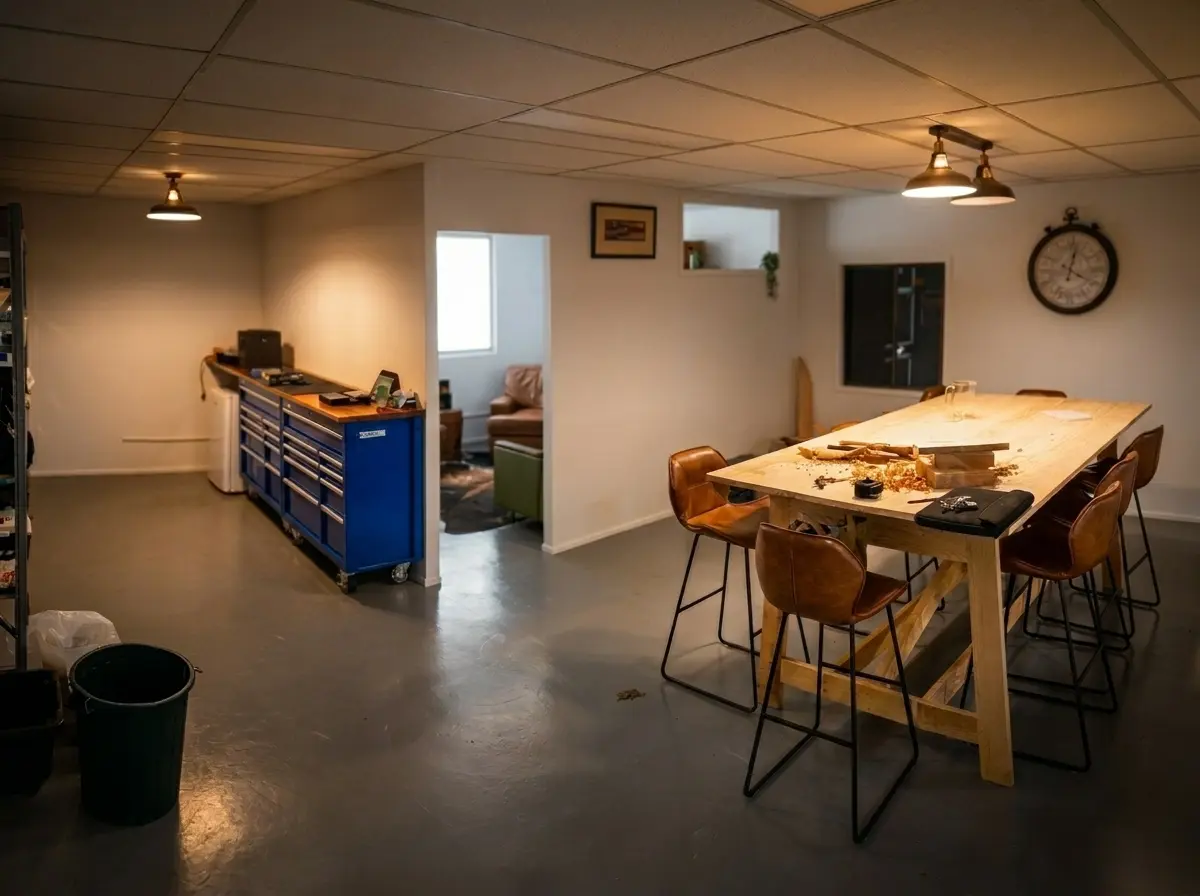
- You want the practical workshop setting available at Timber Therapy.
- Body language and physical presence help you feel understood.
- You live within a manageable distance of Stafford.
For some men, attending in person makes the appointment feel more deliberate. The act of arriving can help signal that this hour has a different purpose from the rest of the week.
Choose online when access is the main barrier
Online therapy can make regular attendance possible when travel, location or work would otherwise prevent it.
It may suit you when:
- You live in rural, regional or remote Australia.
- You travel regularly or work away from home.
- The nearest suitable therapist is a long drive away.
- You want to speak with someone outside your local community.
- You have limited time between work and family responsibilities.
- You prefer beginning from a familiar environment.
- You need continuity while moving between locations.
Online therapy can also reduce the amount of preparation around an appointment. You do not need to account for parking, traffic or several hours away from work.
Consider where you can be most honest
Convenience does not matter if you cannot speak openly.
A man may choose online sessions because they are easier to schedule, then spend the entire appointment monitoring whether his partner, children or colleagues can hear him.
Another man may attend face-to-face but feel so uncomfortable in a clinical environment that he gives short answers and waits for the hour to end.
Ask yourself:
- Where can I speak without being overheard?
- Where am I less likely to multitask or avoid the difficult part?
- Do I feel more comfortable with some physical distance or less?
- Will travel help me transition into the session or make attendance harder?
- Which option can I realistically maintain for several appointments?
For men in small towns, privacy and local visibility often shape that decision as much as the therapy itself.
Think about what happens immediately before and after
The session does not exist separately from the rest of your day.
With face-to-face therapy, driving can provide time to prepare and reflect. It can also mean returning to traffic, work or family responsibilities while still processing a difficult conversation.
With online therapy, you may be able to attend between commitments. That efficiency can become a problem if you join the call straight from a stressful meeting and return to work seconds after it ends.
Whichever format you choose, protect a small transition around the appointment. Arrive early enough to settle and leave enough time to identify what you are taking away.
Technology changes the experience
Video therapy relies on a stable enough connection, a functioning microphone and a device positioned so that both people can communicate naturally.
Small delays, frozen screens and audio problems can interrupt momentum. A clear backup plan reduces the frustration.
Face-to-face sessions avoid most technology problems, but they introduce travel, parking and location constraints.
Neither format is frictionless. The question is which kind of friction is easier to manage.
Some concerns require local or in-person support
Online therapy is not suitable for every situation.
A local or in-person service may be more appropriate when there is immediate safety risk, severe crisis, a need for physical assessment or a treatment that cannot be delivered adequately through video.
A therapist working online should know where you are during the session and have a plan for emergencies.
Format should be a clinical and practical decision, not only a marketing promise.
You can change formats
The first decision does not need to be permanent.
A man may begin online because it is easier to attend, then choose a face-to-face session when he is in Brisbane. Someone living locally may start in the workshop and move online during travel, injury or a period of intense work demands.
Consistency with the same therapist can sometimes matter more than using the same format every time.
Discuss any change beforehand so the practical, privacy and safety arrangements remain clear.
What about the Timber Therapy workshop?
Face-to-face sessions at Timber Therapy take place in a private workshop and counselling space in Stafford on Brisbane’s northside.
You can sit and talk in the counselling room. Where appropriate, some men may choose to work on a simple timber project using supervised hand tools.
That option is only available face-to-face. It may be useful if you find it easier to talk while doing something, but it is not necessary for the therapy to be practical.
Online sessions use the same overall aim: understand what is driving the pressure, identify the pattern and build responses that work in real life.
A simple way to decide
Choose the option that gives you the best combination of:
- Privacy.
- Regular attendance.
- Focus.
- Comfort without avoidance.
- Appropriate clinical support.
- A therapist whose approach fits what you need.
Do not choose face-to-face because you think it proves greater commitment. Do not choose online only because it allows you to squeeze therapy into a day with no room to think.
Choose the format that helps you do the work.
Face-to-face and online therapy for men
Timber Therapy provides face-to-face men’s therapy in Stafford, Brisbane North, and privately funded online sessions for men throughout Australia.
You can begin with the format that makes the most practical sense and review it as the work develops.
Book a face-to-face or online session. Not sure which format fits? Start with a no-cost 15-minute call with Matt.